When heavy monsoon rains arrive, maintaining outdoor pool infrastructure becomes a major challenge for property owners, resort managers, and housing society committees alike. Constant downpours, high atmospheric humidity, windblown debris, and sudden chemical dilution can turn a clean, sparkling pool into a green maintenance headache almost overnight. If you manage a residential pool, a luxury villa, or a commercial hospitality property, you have likely wondered if investing in an automatic pool cover worth it for rainy season conditions, or if it is merely an expensive luxury accessory. Evaluating whether an automatic pool cover worth it requires looking closely at how a motorized shield handles heavy storms, prevents chemical dilution, and eliminates water overflow issues. Throughout this comprehensive guide, we will analyze why an automatic pool cover worth it for property owners seeking to protect their heavy investment from severe weather damage, structural wear, and skyrocketing chemical expenses.
To understand why protective infrastructure matters, you must examine what actually happens to an outdoor pool during heavy rainstorms and prolonged monsoon spells. Rainwater is never entirely pure; as precipitation falls through the atmosphere, it collects dust particles, airborne pollutants, pollen, and organic debris. When deciding if an automatic pool cover worth it, you must consider how rainwater acts as a massive dilution agent that disrupts the delicate chemical balance you work hard to maintain.
The most immediate problem triggered by monsoon storms is the rapid disruption of pool water chemistry. Rainwater is naturally slightly acidic due to dissolved carbon dioxide and atmospheric gases, causing total alkalinity and pH levels to drop steeply. When pH plummets below the ideal range of 7.2 to 7.6, the water becomes corrosive. Corrosive water starts attacking metal ladders, handrails, lighting rings, and heater components while causing eye and skin irritation for swimmers. Furthermore, rain dilutes free chlorine and stabilizer concentrations, leaving the water defenseless. For property owners evaluating whether an automatic pool cover worth it, physical shielding prevents stormwater from directly diluting water chemistry.
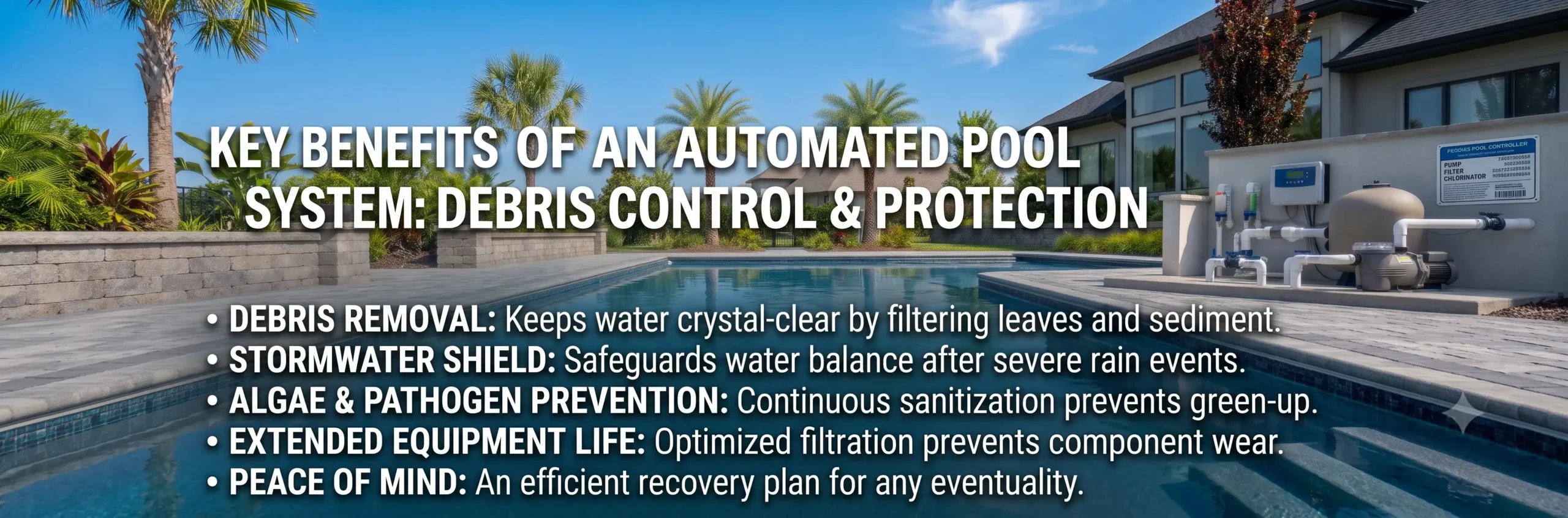
Preventing stormwater from ever touching your pool water is the ultimate defense mechanism against weather-related destruction. When questioning if an automatic pool cover worth it for storm debris control, consider how a motorized barrier keeps the pool clean.
Windstorms frequently accompany monsoon rains, blowing leaves, soil, and lawn fertilizers straight across your deck into the open water. Once organic debris sinks to the floor, it breaks down rapidly, consuming free chlorine and feeding algae blooms. When you seal your pool with a heavy-duty automatic pool cover worth it considerations shift entirely toward labor prevention, as the cover catches all windblown debris and keeps the water underneath pristine. Once the storm passes, you simply clear the cover, retract it, and enjoy clean water without tedious manual cleaning.
Upfront investments in smart pool technology can seem steep, but long-term operational expenses reveal where automated shielding pays for itself. When calculating if an automatic pool cover worth it, factor in chemical and water savings.
During wet months, traditional pools lose massive amounts of sanitizer to UV exposure and rain dilution, forcing constant shock treatments. An automatic pool cover blocks sunlight completely, preventing chlorine burn-off and reducing overall chemical consumption by up to fifty percent. Moreover, property owners asking if an automatic pool cover worth it will find that stopping evaporation saves thousands of liters of treated water annually, minimizing makeup water balancing requirements.
Stormy weather creates hazardous conditions around outdoor living spaces. Slippery coping stones, reduced visibility, and wet decking increase the risk of accidental slips and falls for children and pets. When checking if an automatic pool cover worth it for safety, heavy-duty structural strength is paramount.
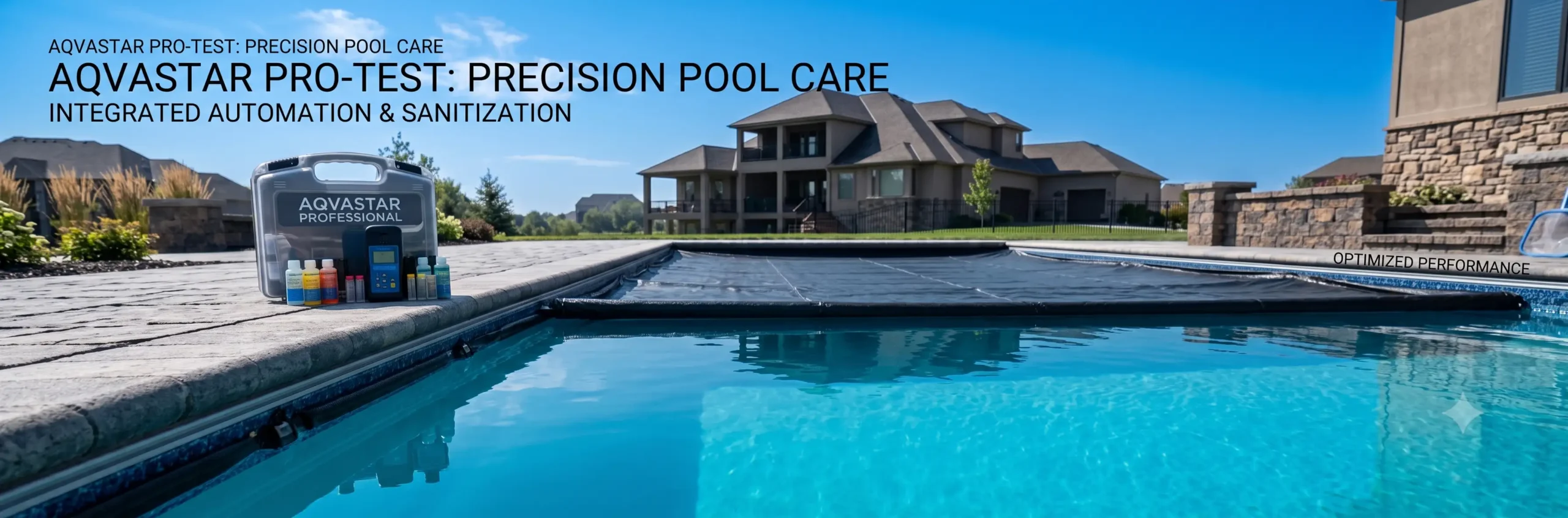
Commercial-grade automatic pool covers are engineered not just for cleanliness, but for heavy-duty structural safety. Constructed from multi-layer reinforced vinyl webbing and robust tracks, they can support significant weight safely. If a child or pet wanders near the pool during a blinding rainstorm when visibility is poor, a locked automatic cover acts as a reliable weight-bearing safety net, proving why an automatic pool cover worth it for family safety.
Owning a motorized pool cover during the rainy season requires proper operational habits to ensure smooth functioning. Knowing if an automatic pool cover worth it depends on managing standing water correctly.
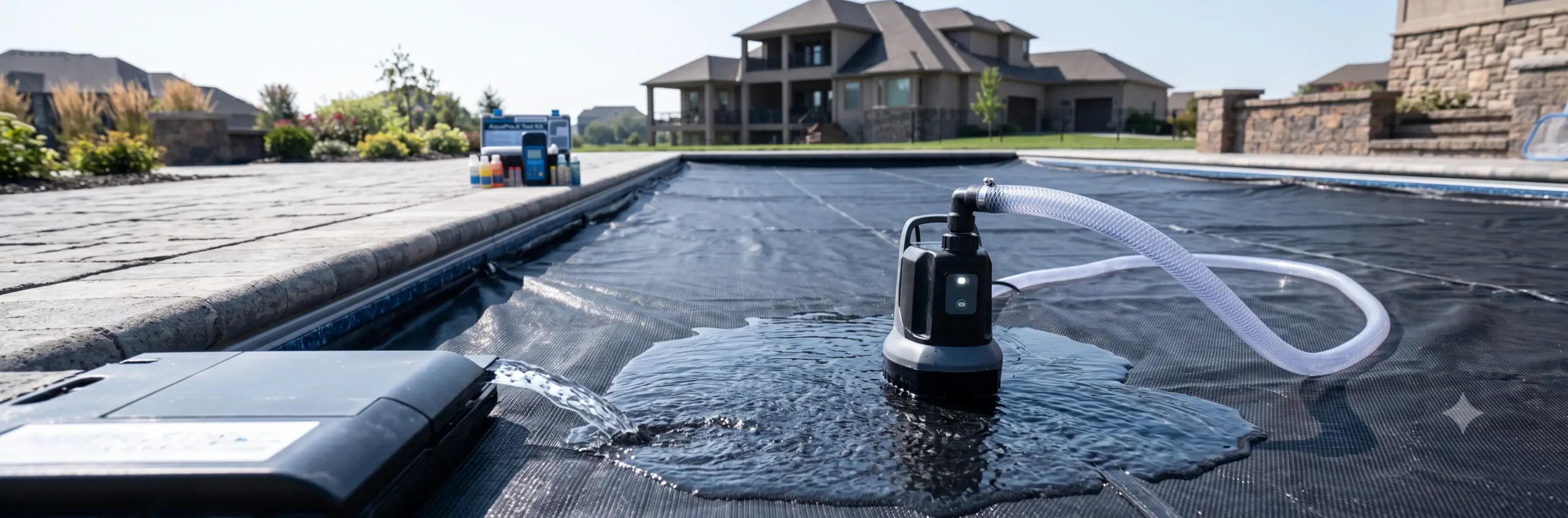
When rain falls continuously on a closed cover, hundreds of liters of water pool on top of the vinyl material. Allowing this standing water to accumulate creates a heavy burden on the tracking mechanism and risks spilling contaminated rainwater straight into the pool when retracted. Property owners evaluating if an automatic pool cover worth it must use a dedicated, automatic submersible cover pump placed at the lowest depression of the vinyl surface to remove rainwater before retracting the cover.
Determining whether an automatic pool cover worth it requires balancing upfront installation expenses against long-term savings on water, balancing chemicals, equipment wear, and manual labor. During harsh monsoon seasons, having a reliable motorized shield protects your pool chemistry, prevents slippery deck accidents, and eliminates hours of tedious post-storm cleanups. Understanding that an automatic pool cover worth it for comprehensive protection ensures your pool remains safe, pristine, and energy-efficient throughout the entire rainy season.