

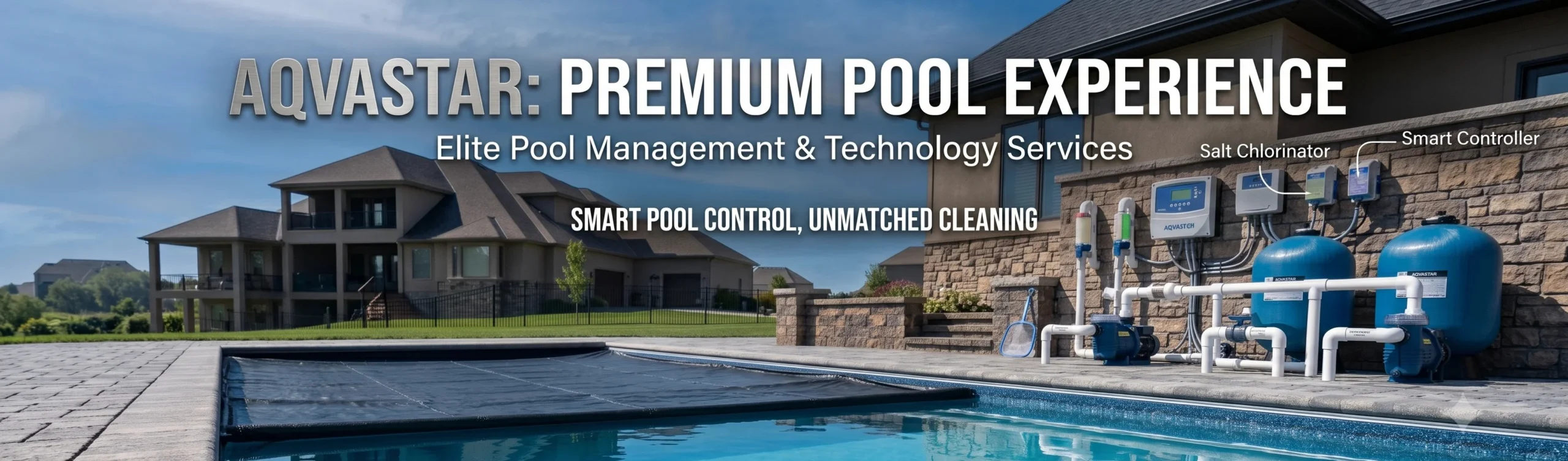
Building or managing a swimming pool is a major investment that adds immense luxury, recreational value, and aesthetic appeal to any residential housing society, luxury hotel, or private estate. However, the concrete shell and sparkling surface are only the visible parts of a much larger system. The true longevity, hygiene, and clarity of your pool water depend on what happens inside the mechanical plant room. Installing high-performance swimming pool equipment is essential to keep water continuously moving, physically clean, and biologically safe for bathers.
Without properly specified swimming pool equipment, standing water quickly turns stagnant. Dust, organic matter, leaves, and swimmer waste build up, creating an environment where algae and harmful bacteria thrive. Selecting heavy-duty, energy-efficient swimming pool equipment supplied by Aqvastar ensures your pool operates smoothly with minimal downtime, low chemical consumption, and optimal power savings.
Whether you are designing a brand-new commercial pool or upgrading an aging filtration system, this comprehensive masterclass covers everything you need to know about choosing, sizing, and maintaining your pool hardware.
To understand how a plant room functions, it helps to look at swimming pool equipment not as individual, standalone items, but as an interconnected ecosystem. Every pump, filter vessel, and chlorinator cell works in unison to maintain pristine water conditions.
When you specify professional swimming pool equipment supplied by Aqvastar, your facility achieves four core operational goals:
Hydraulic Water Circulation: Pushing water through continuous cycles eliminates dead spots where algae and bacteria gather.
Mechanical Solid Filtration: Trapping suspended organic silt, dust, hair, and debris down to fine micron levels before it can compromise clarity.
On-Site Chemical Disinfection: Generating a steady baseline of active sanitizer to neutralize bacteria, viruses, and pathogens on contact.
Basin Water Balance & Protection: Keeping pH, total alkalinity, and calcium hardness balanced to protect internal pipework and pool surfaces from corrosion or scale buildup.
Understanding how pool hardware works together does not require an engineering degree. Water movement follows a simple, continuous loop through your installed swimming pool equipment.
The process starts directly inside the pool basin. Water enters the suction line through floor main drains and wall-mounted skimmers. The heavy-duty Aqvastar circulation pump supplies the suction required to pull raw water to the equipment pad, passing it first through an internal strainer basket to catch larger debris like leaves.
Next, the pump pushes this water under pressure into the top of the Aqvastar sand filter vessel. As water flows downward through specialized filter media, fine particles and suspended dirt become trapped. The clean, filtered water exits through the bottom of the vessel and moves downstream to the Aqvastar salt chlorinator cell. Here, low-voltage electrolysis generates pure active sanitizer to disinfect the water inline. Finally, the crystal-clear, sanitized water flows back into the pool through return wall jets, completing the cycle.
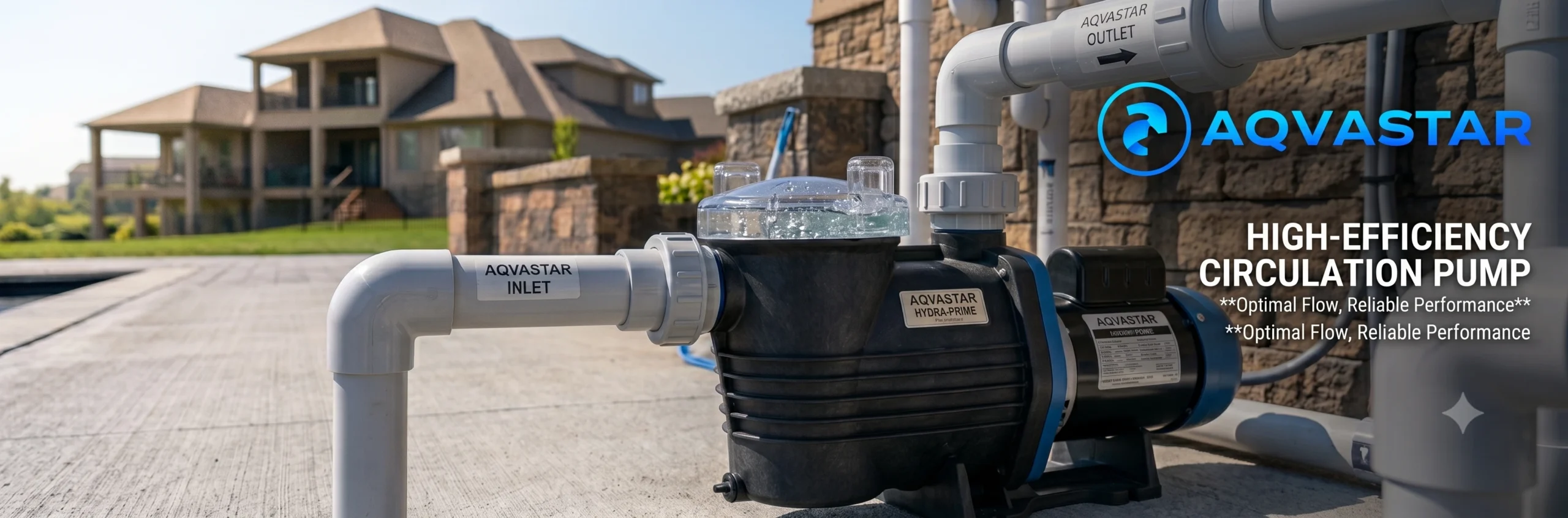
Aqvastar manufactures and supplies a complete range of commercial and residential swimming pool equipment built to withstand heavy daily use, harsh sunlight, and chemical exposure.
The pump is the heart of your mechanical setup. It runs for long hours every day, pulling water from the basin and pushing it through filters and treatment devices. An undersized pump causes cloudy water and poor turnover, while an inefficient pump inflates monthly electricity costs.
Aqvastar supplies self-priming circulation pumps engineered with non-corrosive thermoplastic housings, stainless steel shaft seals, and integrated thermal protection. Designed for silent operation and maximum hydraulic efficiency, Aqvastar circulation pumps handle heavy operating loads easily.
While pumps drive water movement, filter vessels handle physical purification. Sand filters remain the industry gold standard due to their high dirt-holding capacity, structural durability, and easy maintenance.
Aqvastar supplies heavy-duty, fiberglass-reinforced sand filter tanks equipped with multi-port control valves. These valves let pool operators backwash, rinse, recirculate, or bypass water with a simple lever turn. Internal lateral underdrains ensure even water flow across the filter bed, capturing fine particles down to 20 microns.
Manually handling, storing, and pouring liquid chlorine or chemical pucks is costly, labor-intensive, and hazardous for staff. Modern residential societies and commercial resorts prefer automated, on-site chlorination.
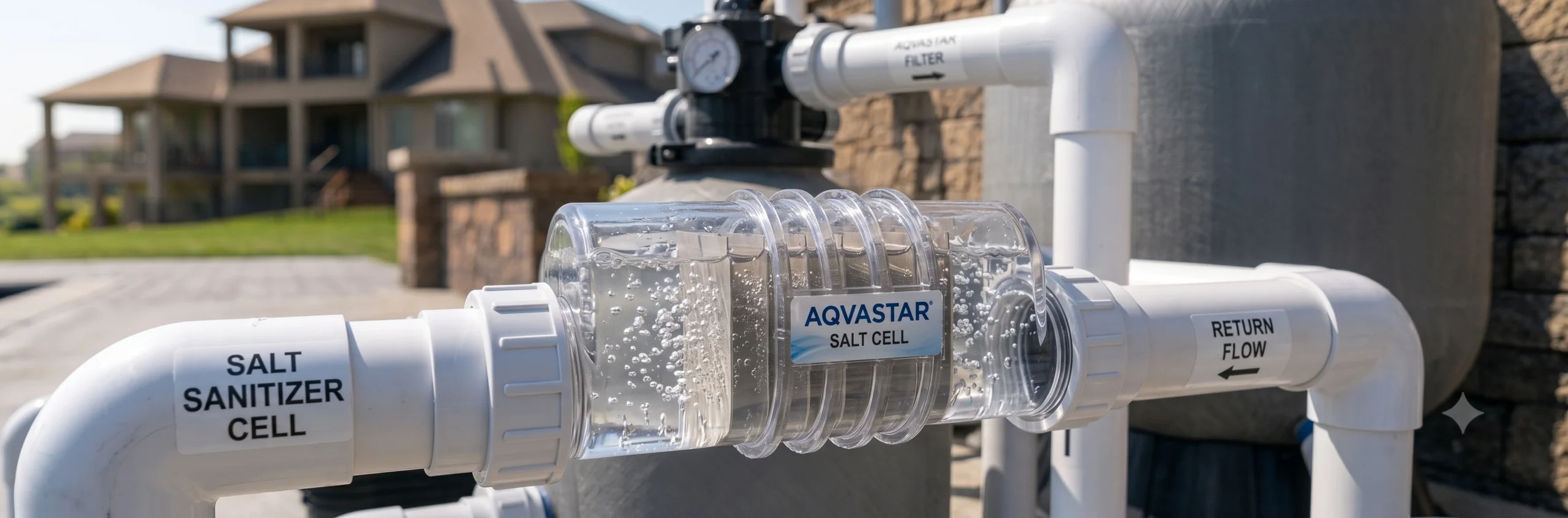
Aqvastar supplies advanced automated salt water chlorinators that convert dissolved pool salt into active sanitizer inline. As salted water flows across self-cleaning titanium plates inside the cell, pure chlorine is created continuously. This eliminates harsh chemical odors, prevents eye sting, and delivers soft, skin-friendly water for swimmers.
Underwater lighting provides critical night visibility for swimmer safety while transforming a dark body of water into an elegant evening landscape feature.
Aqvastar supplies ultrabright LED underwater lights available in daylight white and multi-color RGB options. Sealed inside leak-proof polycarbonate or stainless steel housings, Aqvastar LED lights consume up to 80% less power than traditional halogen bulbs while delivering broad, uniform illumination across the pool floor.
Proper hydraulic performance depends heavily on the fittings embedded directly into the pool structure. Poorly positioned main drains or skimmers create circulation dead zones and suction hazards.
Aqvastar supplies a complete line of heavy-duty ABS plastic fittings, including anti-vortex floor main drains, surface skimmers, adjustable return jets, and wall vacuum ports. Built to meet international safety standards, Aqvastar fittings ensure smooth water distribution and anti-entrapment safety for swimmers.
Even automated pools need periodic physical brushing and vacuuming to clear windblown dust and settled floor silt.
Aqvastar supplies professional-grade manual cleaning tools, including aluminum telescopic poles, heavy-duty leaf rakes, vacuum hoses, weighted floor vacuum heads, and wall brushes. For large installations, Aqvastar also supplies automated robotic cleaners that scrub floors and walls independently, reducing manual labor.
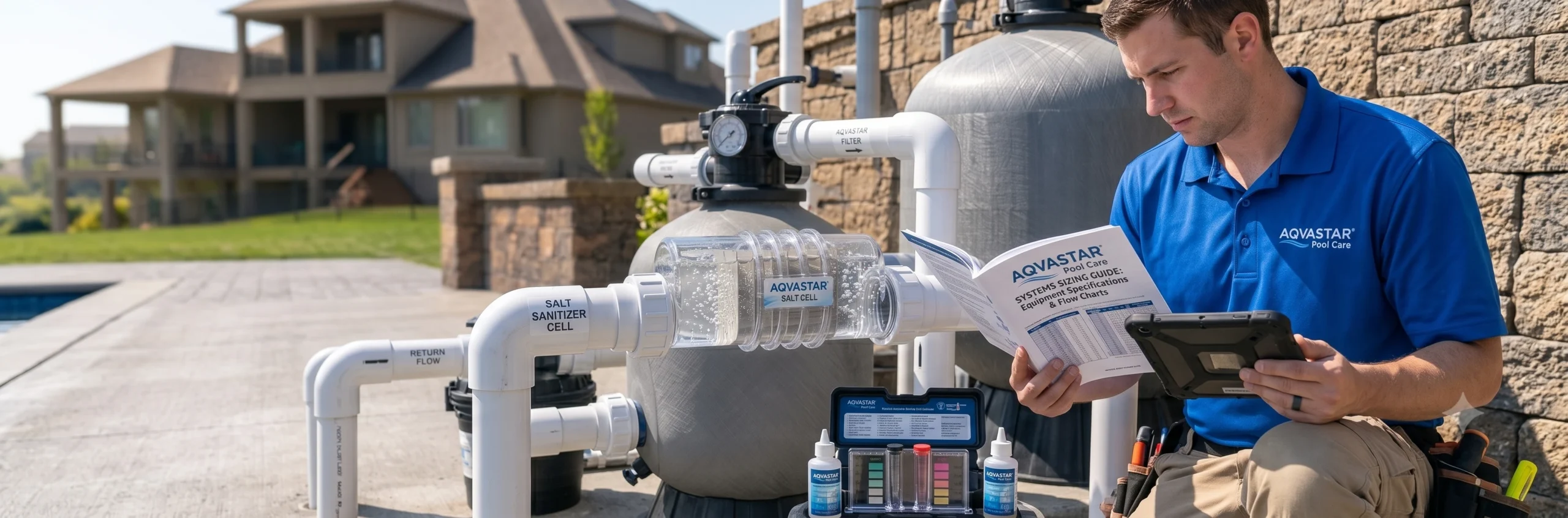
Installing incorrectly sized swimming pool equipment can lead to cloudy water, poor filtration, higher electricity bills, and premature equipment failure. To maintain efficient circulation and reliable water quality, the pump, filter, and salt chlorinator should be selected according to the pool’s actual water volume and operating requirements.
Start by calculating the total amount of water in the swimming pool. Pool volume is generally measured in liters (L) or cubic meters (m³).
For a standard rectangular swimming pool, use:
Pool Volume (Liters) = Length × Width × Average Depth × 1,000
For example, if a pool is 10 m long, 5 m wide, and has an average depth of 1.5 m:
10 × 5 × 1.5 × 1,000 = 75,000 liters
Therefore, the total pool volume is 75,000 liters or 75 m³.
Turnover time refers to the number of hours required for the filtration system to circulate a volume of water equal to the entire pool volume.
For most residential swimming pools, a turnover time of approximately 6–8 hours is commonly used.
For commercial pools, housing societies, hotels, and resorts, a shorter turnover time of approximately 4–6 hours may be required because of higher bather loads and more intensive pool usage.
The appropriate turnover time should also comply with applicable local regulations and the pool’s operating conditions.
Once you know the pool volume and desired turnover time, calculate the required flow rate.
Required Flow Rate (m³/h) = Pool Volume (m³) ÷ Turnover Time (hours)
For example, for a 75 m³ pool with a target turnover time of 6 hours:
75 ÷ 6 = 12.5 m³/h
This means the circulation system should be designed to deliver approximately 12.5 cubic meters of water per hour, subject to the actual hydraulic resistance of the plumbing and equipment.
The swimming pool filter should be properly matched to the system’s required flow rate.
Select an Aqvastar sand filter with a rated flow capacity suitable for the calculated system flow. Avoid connecting a high-output pump to an undersized filter vessel.
Excessive water velocity through an undersized filter can reduce filtration performance, disturb the filter media, increase pressure, and potentially shorten the service life of the filtration system.
For reliable performance, the pump and filter should be sized as a complete circulation system rather than selected independently.
The salt chlorinator should also be selected according to the pool volume, operating conditions, climate, and expected chlorine demand.
As a practical sizing approach, an Aqvastar salt chlorinator can be selected with additional capacity above the pool’s actual volume. For example, selecting a system rated for around 1.5 times the actual pool volume can provide useful operating headroom where appropriate.
A larger-capacity chlorinator does not necessarily need to operate continuously at maximum output. Running the system at a lower percentage output may reduce operating stress on the electrolytic cell while still maintaining the required chlorine level.
However, actual chlorine demand can vary significantly depending on water temperature, sunlight, bather load, pool usage, stabilizer level, and water chemistry, so the final chlorinator size should be based on site conditions.
Correct swimming pool equipment sizing is about creating a balanced system. The pump, sand filter, plumbing, and salt chlorinator should all work together at an appropriate flow rate.
Before selecting equipment:
Calculate Pool Volume → Determine Turnover Time → Calculate Flow Rate → Match Pump & Filter → Select Salt Chlorinator Capacity
Proper equipment sizing helps deliver clearer pool water, efficient filtration, lower energy consumption, reliable chlorination, and longer equipment life.
Protect your swimming pool equipment investment by avoiding these common installation and operational errors:
Placing Salt Cells Upstream of Heaters: Always install your Aqvastar salt chlorinator cell as the final component on the return line. Placing a cell before a heater exposes internal copper exchangers to concentrated sanitizer, causing severe corrosion.
Operating Pumps Dry: Never start a circulation pump without filling its strainer basket with water first. Operating a pump dry generates friction heat that ruins mechanical shaft seals instantly.
Ignoring Filter Pressure Gauges: Failing to backwash sand filters when operating pressure rises 8 to 10 PSI above baseline restricts water flow, reduces turnover efficiency, and strains pump motors.
Unbalanced Water Chemistry: Operating pool water with low pH (below 7.0) corrodes metal pump impellers and heater components, while high pH causes rapid scaling inside filter tanks and chlorinator cells.
Investing in high-quality swimming pool equipment is the foundation of clear water, swimmer safety, and low long-term operating costs. From heavy-duty circulation pumps and filtration sand vessels to automated salt chlorinators and brilliant underwater LED lighting, every component plays a vital role in maintaining your pool.
With Aqvastar as your equipment manufacturer and supplier, outfitting your plant room is straightforward and dependable. Whether constructing a new private villa pool, upgrading a housing society pad, or managing a high-density resort facility, Aqvastar supplies the complete range of swimming pool equipment needed to keep water crystal clear every day of the year.